Flexible, effecient, and cost-effective shore power that allows ships at berth to plug into the electrical grid and turn off their auxiliary diesel engines.
Shore Power Benefits
- No emissions
- No noise
- No vibration
- Lower fuel consumption
- Lower wear and tear
- Easier maintenance
PowerCon’s Shore Power
- Compact
- Reliable
- Cost-effective
- Fast lead times
- Flexible, scalable, modular
- Maximum return on investment
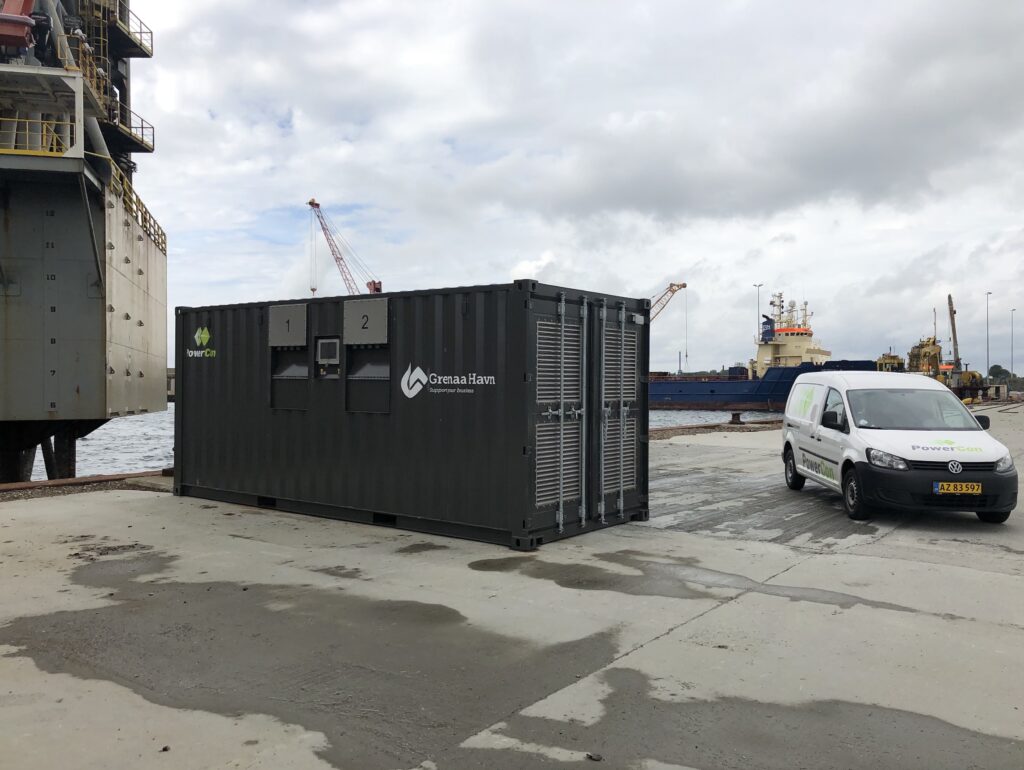
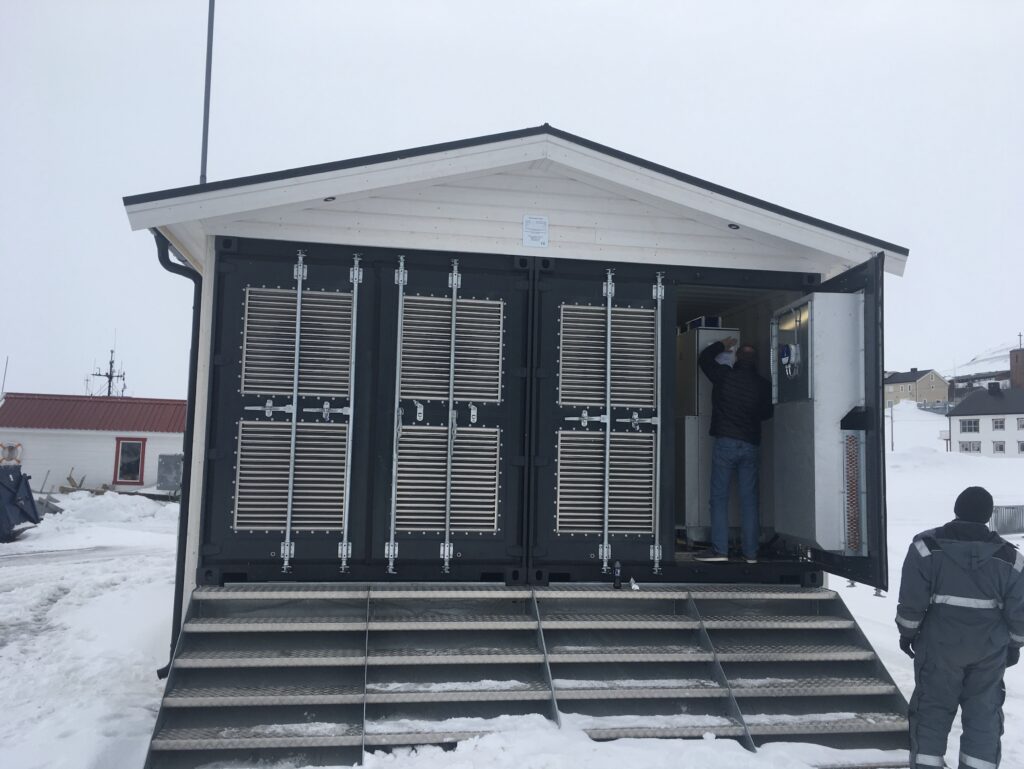
Also known as Onshore Power Supply (OPS), cold ironing, shore-to-ship power and shore-side electricity to name a few terms, PowerCon pioneered the shore power industry with an innovative and modular approach to construct shore power systems. By integrating our components into standard shipping containers, we pioneered the “building block” approach which allows us to put together the most flexible, compact, and scalable solution for any port.
The benefits of a containerized shore power system are many. Most importantly, the containers allow us to pre-manufacture, pre-assemble, and pre-test our solutions in our factory, instead of onsite. Here, the containerized design also ensures easy and fast installation. Finally, our compact design minimizes the footprint of the shore power installation, allowing better utilization of valuable real estate and port areas with limited space.
PowerCon’s industry independence allows us to use the latest and greatest technologies and materials in constructing our shore power solutions. We build our systems according to the international standard for shore power (IEC/IEEE/ISO 80005) and are also a member of the standard committee.
PowerCon supplies both high and low voltage shore power solutions and covers all vessel types, from the largest cruise ships to container ships to smaller fishing vessels and ferries as seen from some of our main references below.
Project Role
Although occasionally functioning as a sub-contractor for the shore power systems, PowerCon is often chosen as a turn-key supplier, undertaking the complete scope of a shore power project and implementing end-to-end solutions. These additional tasks can include grid connection upgrades, civil works, cabling, switching stations, connection boxes, cable management solution (CMS) as well as all related services like maintenance, daily operations, etc. For some of those tasks, PowerCon works with a number of trusted sub-suppliers.
This is especially true for the cable management solution (CMS) which is the solution on the berth that feeds the cables from shore to the ship. Although PowerCon has its own designs, we have also worked with several different companies over the years that specialize in CMS solutions, offering variable degrees of flexibility and price points. Some of them are listed below.


High Voltage Shore Power References

Southampton
England

Rostock
Germany

Bergen
Norway
Low Voltage Shore Power References
Grenaa
Denmark
Båtsfjord
Norway

Skagen
Denmark
PowerFlex
Over the recent years, PowerCon has started supplying shore power solutions for container terminals. Launched by a pilot project named “PowerFlex”, we set out to design and implement low-cost and flexible shore power supply for container ships that included onboard battery charging in the system design.
Background
Container ships continue to rely on the highly pollutant marine fuel to operate, contributing an estimated 50-60% of all ship emissions. If the electricity for shore power comes from renewables, the technology can eliminates all CO2, air pollutants, noise, and vibration at the container terminals by allowing the ships to plug in while they are in port. However, with the additional possibility to charge onboard batteries, shore power can have an even more significant global CO2 mitigation potential.
Pushing the boundaries
PowerCon has over the years been a part of the successful implementation of various shore power systems, particularly for cruise ships, adding significant savings to the cruise ports. This made it obvious to offer the same savings to the container ship segment and expand the system capabilities to charge onboard batteries too, collectively named OPS-Charger. Therefore, the main objective of this project was to advance the technological and market readiness of a competitive shore power solution to supply electricity to container ships at berth charge onboard batteries. For 36 months, we matured, tested, and demonstrated the OPS-Charger in a real case scenarios.
Outcome
The main outcome of the project was a market ready solution suitable for container ports around the world with an attractive payback period. Market adoption is expected to contribute to:
1) reduce greenhouse gas emissions, pollution, noise, and vibration from container ships at berth and at sea, thereby contributing to the UN Sustainable Development Goals 3, 7, 9, 11, 13, and 14.
2) the circular economy.
3) the creation of high-value blue economy jobs.
Overall, the ambition of this project was to significantly impact the blue economy areas of “New facilities that support the diversification or energy efficiency of ports” and “Cleaner shipping”. The project was supported by a BlueInvest grant from the European Union.
Market adoption
A critical milestone was reached in 2021 when the Port of Kristiansand in Norway became the first adopter of this solution, integrating shore power into it broader port electrification strategy with the charging capability. More ports have since followed, and PowerCon sees an increased interest for shore power from container terminals around the world.